


- 18 November, 2026
- 9
- 0
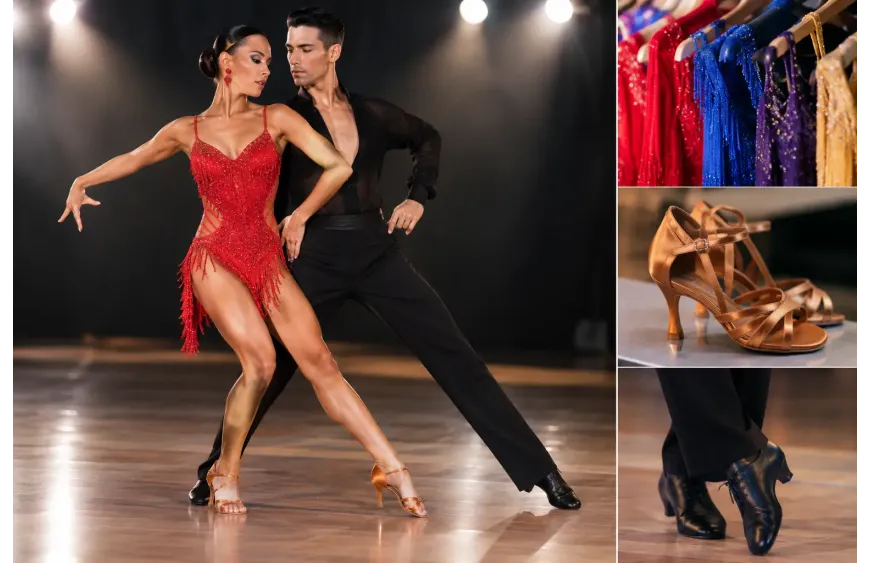
A Latin costume can look extraordinary on a hanger and disappear the moment a dancer steps onto a brightly lit floor. The best Latin costume colors are not simply the shades you love most. They are the shades that support your movement, read clearly from the judges' side of the room, and make you feel fully present in your dance.
For salsa, cha-cha, rumba, samba, jive, and competitive Latin, color is part of the visual story. It can sharpen a fast rhythm, amplify a dramatic line, or give a young dancer a polished, age-appropriate look. The right choice depends on the event, venue, complexion, costume cut, dance style, and, sometimes, the rules of the category.
Why Latin Costume Colors Matter on the Dance Floor
Latin dancewear is designed to move. Fringe, mesh, stretch fabrics, open backs, and stonework create energy that changes as the dancer turns. Color helps that movement register. A rich red can make a compact cha-cha action feel more immediate, while electric blue can make a sweeping rumba line stand out against a warm-toned ballroom floor.
Stage lighting changes every shade. Colors generally appear brighter under direct lighting, while very pale colors may lose definition at a distance. Black is elegant and reliable, but it can flatten under low light unless the costume has contrast through stones, mesh panels, fringe, or a well-placed metallic detail. A costume that photographs beautifully in daylight still needs to be tested under event-style lighting when possible.
Color also affects confidence. Some dancers feel powerful in red, refined in black, or joyful in fuchsia. That feeling is not superficial. When a dancer is comfortable and feels visible, it is easier to dance with attack, expression, and commitment.
Choosing Latin Costume Colors for Your Skin Tone
There is no rule saying a dancer must wear a certain color because of their skin tone. Personal style should lead. Still, understanding contrast can make choosing easier, especially when shopping for a competition dress or showcase costume.
Dancers with deeper skin tones often create striking contrast in saturated jewel shades such as emerald, cobalt, bright purple, hot pink, and rich orange. High-shine fabrics and crystal details can look especially vivid. Dancers with fair or light skin may love the clarity of red, royal blue, turquoise, berry, or black with strong sparkle. Medium and olive complexions can often wear both warm and cool colors beautifully, including coral, teal, wine, gold, lime, and vivid magenta.
The goal is not to follow a color chart. Look for enough contrast between the costume and your skin to keep your lines clear. If a nude, beige, pale pink, or light gold fabric is close to your natural skin tone, it may need darker trim, rhinestones, or a more saturated skirt to avoid looking unfinished under lights.
When trying on a costume, step away from the mirror. Look at it from several feet back and take a short video while moving. The question is not only, “Is this flattering?” It is also, “Can I see the shape of my body and the details of my dancing?”
Saturation Usually Wins Over Subtlety
Muted colors have their place, particularly for a sophisticated rumba or a social dance look. But competition floors and showcase stages reward visual clarity. Strongly saturated colors usually read better than dusty versions of the same shade.
For example, a bright turquoise will typically stand out more than a soft powder blue. A true fuchsia may carry farther than a pale blush pink. This does not mean every Latin costume needs to be neon. It means the color should have enough depth, contrast, or embellishment to hold its own in the room.
Match the Color to the Dance, Not Just the Trend
Some colors naturally support the character of particular Latin dances. They are not requirements, and a dancer can absolutely create a memorable look by going against expectation. Still, these associations are useful when a routine needs a clear visual direction.
- Cha-cha: Red, coral, fuchsia, lime, turquoise, and crisp black-and-white combinations can suit its playful, rhythmic energy.
- Rumba: Wine, burgundy, deep purple, black, midnight blue, and red can complement a more intimate or dramatic performance.
- Samba: Yellow, green, orange, tropical pink, and bright blue bring out its festive, high-energy personality.
- Jive: High-contrast color combinations, bright red, royal blue, sunny yellow, and bold prints can emphasize speed and fun.
- Paso doble: Red, black, gold, and ivory remain popular because they support the dance's strong, theatrical shape.
For a multi-dance Latin competition, a versatile color often works better than one that is tied too closely to a single dance. Red, cobalt, emerald, fuchsia, and black with brilliant stones can transition well across all five Latin dances.
Consider Your Partner and the Floor Around You
A couple does not need matching costumes, but the two looks should make sense together. If one partner wears a vivid red Latin dress, the other may wear black with a subtle red accent, a coordinating tie, or a complementary shirt detail. This creates unity without making the partnership look overly coordinated.
Avoid having both partners wear equally intense, competing colors unless that is a deliberate part of the performance concept. A bright yellow dress paired with a bright orange shirt can be energetic, but it may be visually busy from a distance. Often, one dancer should be the main color focus while the other provides a clean frame.
Also think about the likely setting. A dark costume against a dark drape may need more crystal work or brighter fringe. A pale dress on a pale floor may benefit from a saturated waistband, darker bodysuit, or strong accessories. Event venues vary, so there is no universal perfect shade. Preparing for contrast is the practical choice.
Stones, Fringe, and Fabric Can Change the Color
The base fabric is only one part of the final effect. Rhinestones reflect the surrounding light and can shift the costume's appearance from one angle to another. Clear stones add sparkle without changing the color story much. AB-style finishes can reflect several colors, while colored stones can deepen or cool the base fabric.
A black dress with crystal fringe may look silver in motion. A red dress with gold stones feels warmer and more classic; the same red with silver or clear stones can look sharper and more modern. Mesh inserts also matter. Black mesh offers graphic contrast, while nude mesh can create the illusion of a more open design.
Before adding accessories, decide what the costume should communicate from across the floor. If the dress already has intense color, heavy fringe, and dense stonework, keep earrings, hair jewelry, and makeup balanced. If the costume is sleek and simple, accessories may be the detail that gives it competition presence.
Check Category Rules Before Committing
For juvenile and youth dancers, costume regulations may limit certain cuts, decorations, transparency, or styles. Rules can vary by organization, age division, and event. A color may be perfectly acceptable while the amount of rhinestoning, nude mesh, or fabric treatment is not.
Parents should check the current event rules before purchasing a competition dress. It is frustrating to find a costume that fits beautifully, only to learn that it does not meet the category standard. For young dancers, bright, clean colors with comfortable coverage and secure movement are often the best starting point.
Adult dancers have more creative freedom, but practicality still matters. Very light fabrics can show perspiration, makeup transfer, or tan marks. Very dark fabrics can hide beautiful body action if the design lacks contrast. The best competition costume is not the most elaborate one. It is the one that stays secure, allows full movement, and supports the dancer's performance.
Try Your Costume in Motion Before the Event
A color decision should end with a movement test. Put on the shoes, dance underwear or bodysuit, jewelry, and hairstyle you plan to wear. Then practice turns, walks, spins, arm styling, and any floor work. Film it from a distance in both bright and dimmer light.
Look for whether fringe reads as movement, whether stones flash too heavily, and whether the color still defines your shape. If something feels off, small adjustments can make a major difference: a brighter earring, a contrasting belt, added stones near the neckline, or a different tan level.
For dancers who want help comparing colors, fabrics, and fit in person, Dancewear Champions can make the process less overwhelming. A well-chosen Latin look should never distract you from the dancing. It should give you the confidence to walk onto the floor, take your position, and let every movement be seen.
Tags Latin costume, Latin dance costume, Latin dancewear, Latin practice dancewear, Latin competition dancewear, Latin performance dancewear, Latin showcase dancewear, Latin costume for women, Latin dance costume for women, Latin dancewear for women, Latin practice dancewear for women, Latin competition dancewear for women, Latin performance dancewear for women, Latin showcase dancewear for women, Latin costume for men, Latin dance costume for men, Latin dancewear for men, Latin practice dancewear for men, Latin competition dancewear for men, Latin performance dancewear for men, Latin showcase dancewear for men, Latin dance shoes, Latin dance shoes for women, Latin dance shoes for men,