


- 07 August, 2026
- 226
- 0
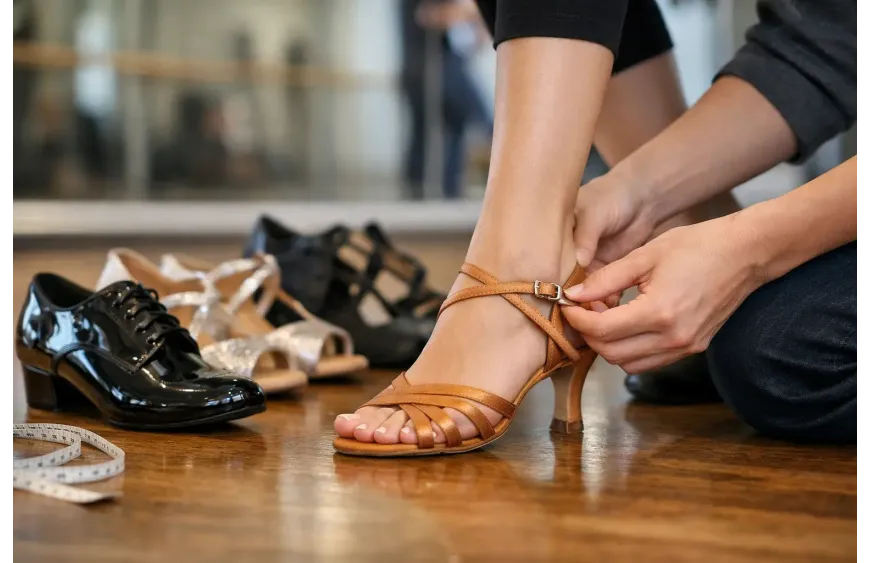
A ballroom shoe that slips at the heel or pinches across the toes can change the way you dance within one song. This ballroom shoe sizing guide helps you choose a fit that supports clean footwork, balance, turns, and confidence, whether you are buying your first social dance shoe or preparing for competition.
Dance shoes should not fit exactly like casual sneakers, boots, or work shoes. They are made for a pointed toe, a moving foot, and close contact with the floor. The best size depends on your foot shape, the shoe material, the dance style, and the brand’s own size chart.
Start With an Accurate Foot Measurement
Measure both feet before comparing sizes. Feet can differ slightly in length and width, and you should fit the larger foot. Measure later in the day or after dancing, when your feet are more likely to be at their fullest size.
Stand with your heel lightly against a wall on a sheet of paper. Keep your weight evenly distributed, then mark the end of your longest toe. Measure from the wall edge to that mark in centimeters or inches. Repeat for the other foot. This is more reliable than tracing around the foot, which often adds extra space and can lead to an oversized shoe.
Use your length measurement with the size chart for the specific shoe you are considering. A women’s street size, a men’s dress-shoe size, and a ballroom shoe size are not always interchangeable. Brand conversion charts are helpful, but the measurement and the listed chart should make the final decision.
Measure Width and Foot Shape Too
Length is only half the fitting process. A narrow heel, high instep, wide forefoot, bunion area, or long second toe can all affect how a shoe feels. If the ball of your foot is broad, a wider style or a shoe with more adjustable straps may be more comfortable than simply sizing up.
Sizing up for width creates extra length at the toe and heel. That extra room can cause the foot to slide forward, make spins less controlled, and leave the shoe feeling unstable. Look for a style that suits your shape instead.
How Ballroom Shoes Should Fit
A new ballroom shoe should feel close and supportive, without sharp pressure, numbness, or pain. There should be minimal empty space in front of the toes. For closed-toe standard ballroom shoes, your longest toe may lightly reach the front when you stand, but it should not be curled, jammed, or pressing hard into the shoe.
For open-toe Latin sandals, the toes should sit securely on the footbed rather than hanging over the front edge. A small amount of toe visibility is normal, but the toes should not spill through the straps. The ball of the foot needs to remain positioned over the widest part of the sole so that you can push through the floor with control.
Your heel should remain down in the heel cup when walking, rising, lowering, and taking a backward step. A little movement may occur in a new shoe, particularly in soft materials, but a heel that lifts noticeably will usually continue to be a problem.
A useful fitting check includes four movements:
- Walk forward and backward on a hard indoor surface.
- Rise onto the ball of the foot and lower with control.
- Bend the knees as you would during a basic dance action.
- Turn gently in place to notice heel movement or toe pressure.
Try these movements on both feet. A shoe that feels fine while seated may reveal a pressure point the moment you take dance position or transfer weight.
Closed-Toe Ballroom, Smooth, and Standard Shoes
Closed-toe shoes for ballroom, standard, and American smooth generally need a refined, close fit through the heel and midfoot. Men’s shoes may be available in regular or wider fittings, while ladies’ styles can vary in toe-box shape and vamp length. A pointed or tapered toe shape may feel tighter than a rounded toe shape even in the same labeled size.
Avoid choosing a larger shoe because you expect to wear thick socks. Ballroom shoes are normally worn with thin dance socks, hosiery, or bare feet depending on the style. If you need extra room for an orthotic or a specific foot concern, choose a compatible style and confirm that the shoe can accommodate it without compromising stability.
Leather shoes often soften and mold slightly with wear, especially across the forefoot. That does not mean a painful shoe will become the right size. Stretch is usually modest and uneven. A shoe that is too short will remain too short.
Open-Toe Latin and Social Dance Sandals
Latin, salsa, bachata, and social dance sandals are designed to fit more snugly than many everyday shoes. The straps should hold the forefoot in place during turns, but they should not cut into the skin or leave immediate deep marks. Adjustable buckles and crossed straps can help dancers with narrower or lower-volume feet achieve a more secure fit.
When trying an open-toe style, check the placement of the front straps. They should sit behind the toes and across the forefoot comfortably. If the straps land directly on a bunion area or press the little toe, another design may be a better match, even if the length is correct.
Satin and soft leather can relax with wear. Synthetic materials may change less. Because each material behaves differently, it is wise to judge the shoe as it fits now, not on the hope that it will stretch significantly after a few classes.
Heel Height Changes the Fit
A higher heel shifts weight forward. A shoe that feels comfortable in a low heel may feel tighter at the toes in a higher heel because more pressure moves to the ball of the foot. Beginners and social dancers often benefit from a lower, stable heel while building strength and technique.
Heel shape matters as well. A flared or broader heel generally feels more stable than a slim heel. This is not only a style choice. It affects balance, confidence, and how long you can comfortably practice.
Common Sizing Mistakes to Avoid
The most common mistake is buying a shoe with extra room “just in case.” Casual footwear often leaves room for thicker socks and day-long swelling. Dance footwear needs the foot to stay connected to the shoe. Too much space can make the shoe harder to control and may increase friction.
Another mistake is relying on a previous size from a different brand. Even two shoes labeled with the same size can fit differently because of last shape, material, toe box, and width. Always review the chart and product guidance for the style in front of you.
Do not judge fit only by standing still. Dance involves pressure through the ball of the foot, ankle articulation, and directional changes. Test the shoe in movement before deciding it is right.
Finally, do not force a fit because you love the look. The right dance shoe should support your dancing and suit your foot. A different strap pattern, width, or heel height can make a bigger difference than trying to break in an unsuitable size.
When to Ask for Personal Fit Guidance
Personal guidance is especially useful for a first pair of ballroom shoes, youth dancers whose feet are changing, dancers between sizes, and anyone managing bunions, wide feet, narrow heels, or a high instep. It also helps when selecting competition footwear, where appearance and technical security both matter.
For Toronto and GTA dancers, Dancewear Champions offers one-to-one shoe-fitting support at its Thornhill shopping location. Bring the socks or hosiery you plan to wear, and try the shoes with dance movements rather than a quick walk across the room. If you are ordering online, use the shoe’s dedicated chart, measure carefully, and compare your foot shape with the style description.
The goal is not to find a shoe that feels loose and familiar right away. It is to find one that holds your foot securely, gives your toes room to work, and lets you focus on your partner, timing, and the music instead of your feet.
Tags ballroom shoe, latin ballroom shoe, latin shoes, dance shoes
Related Products

IDS - Contra - Black Patent
$254.00CAD
Galex - Black Nubuck - Heel 4cm
$225.00CAD
Galex - Black Nubuck - Heel 2cm
$225.00CAD
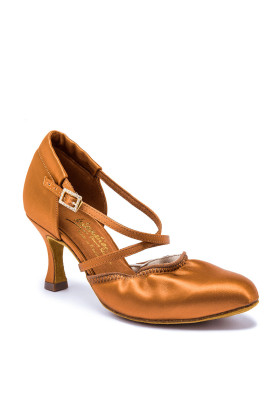
IDS - AMERICAN FLEX - TAN SATIN - 2" heel
$254.00CAD