

- 16 September, 2026
- 23
- 0
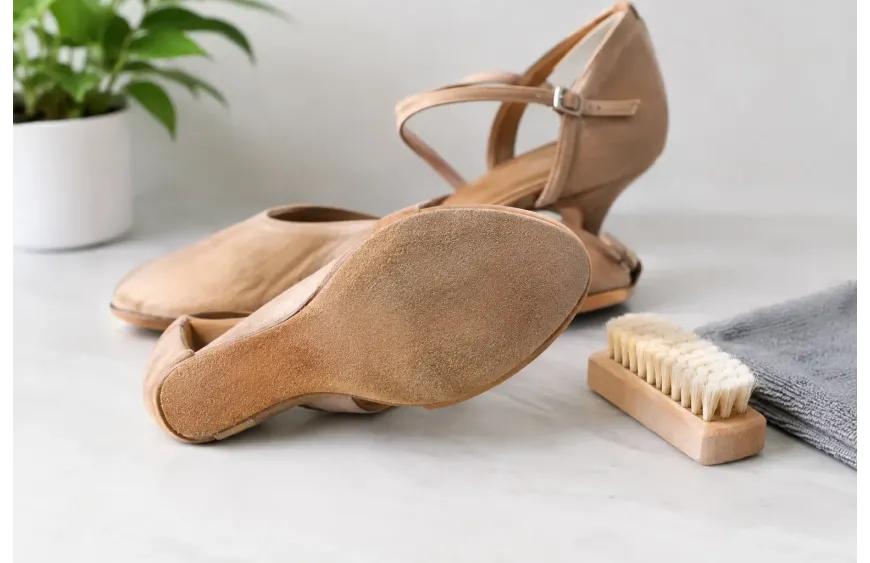
A suede sole that suddenly feels slick can change the way you dance within one song. Turns may travel too far, Latin walks can feel uncertain, and a familiar ballroom floor may seem unexpectedly slippery. Learning to clean suede dance soles properly is one of the simplest ways to protect your control, confidence, and the useful life of your dance shoes.
Suede-soled ballroom and Latin shoes are made to create controlled traction on a dance floor. They are not meant to stay perfectly smooth. As the nap becomes packed down with dust, floor finish, fibers, and residue, the sole loses the texture that helps it grip. The goal is not to make the suede look new. It is to lift the nap and return the sole to an even, responsive surface.
Why Suede Soles Need Regular Care
Your shoe soles collect more than visible dirt. Studio floors can leave behind fine dust, waxy buildup, hair, lint, and traces of cleaning products. At social dances and competitions, your shoes may also pick up residue from entrances, carpeting, dressing rooms, or food areas near the floor.
That buildup compresses the suede fibers. A compressed sole often feels hard, shiny, or glassy in patches. It can reduce traction, but it can also create inconsistent traction. That inconsistency is often more frustrating than a sole that is simply slippery because one foot may release differently from the other during a turn.
How often you brush depends on where and how you dance. Someone practicing several times each week may brush their soles before every session. A social dancer might only need to do it after a few outings. Check the soles rather than following a strict schedule. If they look smooth, darkened, or compacted, they are ready for attention.
What You Need to Clean Suede Dance Soles
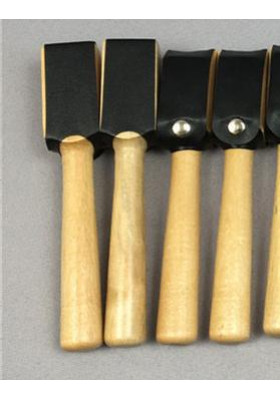
A purpose-made dance shoe brush is the best tool for routine care. These brushes usually have firm wire bristles designed to lift the nap on a suede sole. Keep one in your dance bag, ideally with a cover or pouch so the bristles do not catch on clothing or damage other items.
You may also want a dry cloth, a blunt edge such as an old gift card for lifting stuck debris, and a shoe bag for transporting your shoes. Skip household cleaning sprays, leather conditioners, wet wipes, and soap. They may be useful elsewhere in your shoe-care routine, but they do not belong on the suede bottom of a dance shoe.
How to Clean Suede Dance Soles Safely
Start with dry shoes. If you have just danced for several hours and the soles are damp from floor moisture or perspiration, let them air dry first. Brushing damp suede can push dirt deeper into the fibers and make the surface dry unevenly.
Brush From Toe to Heel
Hold the shoe firmly and brush the sole with short, controlled strokes. Work from the toe toward the heel, then change direction slightly to reach fibers that are lying flat. You do not need to attack the sole with heavy pressure. The brush should lift the nap, not shred it.
Pay particular attention to the ball of the foot, the outer edge of the forefoot, and the heel area. These are the places most likely to become polished down from repeated weight changes, swivels, and turns. If one area has become noticeably smooth, give it a few more gentle passes rather than increasing pressure dramatically.
After brushing, tap the shoe lightly with the sole facing down. This removes loosened dust. A dry cloth can wipe away debris around the edge of the sole, but avoid rubbing the suede with the cloth. Your brush has done the work where it matters.
Remove Stuck Debris Carefully
Occasionally, a piece of tape, gum, or another sticky material gets caught in the sole. Do not soak it or scrape aggressively with a sharp tool. First, use a blunt edge to ease up the material from the surface. Then brush the affected area lightly once the larger piece is gone.
If sticky residue remains embedded in the suede, resist the temptation to use a solvent. Solvents can alter the glue around the sole, affect the finish of the shoe, or leave the suede too hard or too slick. In this situation, personalized advice from a dance shoe specialist is safer than an improvised home remedy.
Test the Sole on the Right Floor
A freshly brushed sole can feel more grippy than expected for the first few minutes. Test it with basic walks, weight changes, and a controlled turn before attempting fast spins or more demanding choreography. This matters most when you are switching between studios, competition venues, and social dance floors, since each floor has its own finish and level of cleanliness.
The right amount of traction is personal. A ballroom dancer may want a predictable glide through a heel turn, while a Latin dancer may prefer a slightly more secure response for quick directional changes. Clean, evenly brushed suede gives you a reliable starting point. It does not make every floor behave the same way.
What Not to Use on Suede Dance Soles
The fastest way to shorten the life of a suede sole is to treat it like a rubber street-shoe sole. Avoid water, oils, polish, adhesive products, and harsh cleaners. Water can stiffen suede and may weaken the bond between the sole and shoe. Oils and conditioners can make it dangerously slippery.
Sandpaper is another common mistake. It may seem like a quick way to rough up a smooth sole, but it removes material rather than restoring the nap. A wire shoe brush is designed to separate and lift fibers. Sandpaper can leave thin, uneven areas that wear through sooner.
Do not wear suede-soled dance shoes outdoors, even for a short walk from the car to the venue. Pavement, gravel, moisture, and salt are hard on the sole and can grind dirt into it immediately. Bring the shoes in a bag and change once you are inside. For Toronto and GTA dancers, this habit is especially worthwhile through wet, snowy, or salted winter conditions.
When Brushing Is Not Enough
Routine brushing cannot repair a sole that is worn thin, torn, detached around the edge, or flattened beyond recovery. Look closely at the sole in good light. If you can see a bald patch where the suede is nearly gone, or if the sole feels uneven beneath your foot, it is time to stop relying on brushing alone.
A shoe may also need attention when traction changes dramatically despite cleaning. Sometimes the problem is not dirt but a floor that has been freshly treated, unusually dusty, or covered with residue. Other times, the shoe may have reached the point where its sole needs professional repair or replacement.
Pay attention to the full shoe, not just its bottom. A worn heel tip, loose strap, stretched upper, or weakened shank can affect stability just as much as a tired sole. Competition dancers and teachers, who spend long hours on their feet, benefit from checking shoes regularly rather than waiting for a visible failure during a lesson, showcase, or event.
Keep Your Soles Cleaner Between Dances
Good storage reduces how much cleaning your shoes need. Let shoes air out after dancing, then store them in a breathable shoe bag instead of sealing them in plastic. Keep them separate from snacks, makeup, hair products, and damp workout clothes in your dance bag.
It also helps to put shoes on only when you are ready to dance. Walking around the studio lobby, washroom, or parking area in suede soles adds dirt that a brush cannot always fully remove. If you teach or practice in several locations, carrying a compact sole brush is far easier than trying to manage unpredictable traction after the music starts.
Dancewear Champions can help dancers choose appropriate shoe-care accessories and assess whether a pair still has useful life for practice, social dancing, or performance. A small brushing habit may not be glamorous, but it lets your shoes do what they were designed to do: support clear, confident movement from the first count to the last.
Tags SHOE BRUSH