

- 08 August, 2026
- 446
- 0
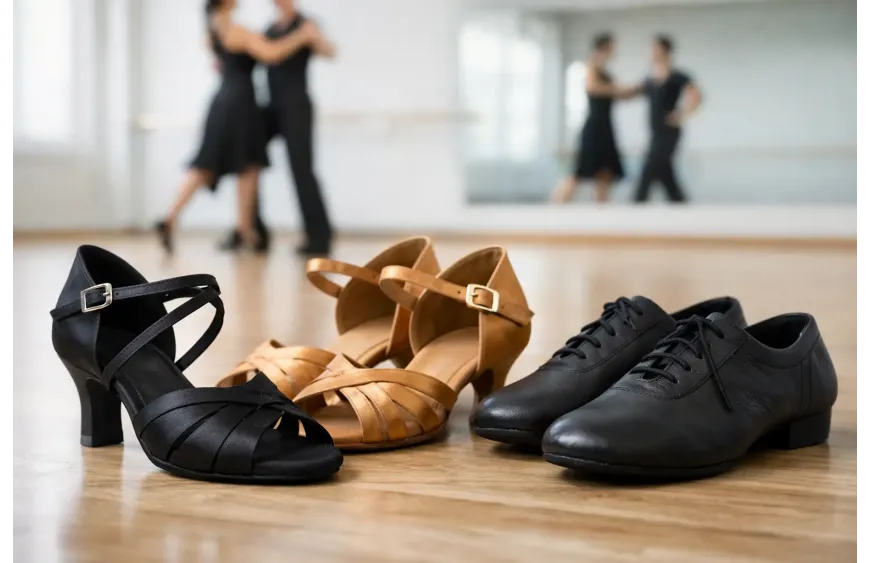
A shoe can look perfect from the ankle down and still make every turn feel cautious. For dancers with a broader forefoot, dance shoes for wide feet are not a luxury or a last resort. They are the foundation for secure weight changes, cleaner footwork, and the confidence to stay on the floor for one more song.
The goal is not simply to find the widest shoe available. A good dance shoe should hold the heel, support the arch appropriately, allow the toes to spread naturally, and sit smoothly across the ball of the foot. Those needs can change depending on whether you dance ballroom, Latin, salsa, bachata, social dance, or teach for several hours at a time.
Why standard-width dance shoes can cause problems
Dance shoes are intentionally shaped differently from street shoes. They are usually lighter, more flexible, and closer to the foot so dancers can point, articulate, and feel the floor. That close fit is useful, but when the front of the shoe is too narrow, the pressure has nowhere to go.
A cramped toe box can lead to pinching at the little toe, rubbing at the bunion area, numbness under the ball of the foot, or a foot that slides backward because the dancer is trying to escape pressure at the front. In open-toe Latin shoes, the problem may show up as toes pushing uncomfortably through the front straps. In closed-toe ballroom shoes, it can appear as a tight vamp that restricts the forefoot with every rise and fall.
Sizing up is not always the answer. A longer shoe may create extra space in front of the toes while leaving the heel loose. That changes stability, particularly during spins, backward walks, and quick directional changes. Width, length, instep height, and heel shape all need to work together.
How dance shoes for wide feet should feel
A properly fitted dance shoe should feel snug and secure, but it should not create sharp pressure. The ball of your foot should sit at the widest point of the shoe, not spill over its edge or feel squeezed before you even begin moving. Your toes need enough room to lie naturally, especially in a closed-toe style.
For most dance shoes, a small amount of close contact is normal because materials can soften with wear. The key difference is between a shoe that feels fitted and one that hurts. Do not assume a painful shoe will stretch exactly where you need it. Satin, leather, mesh, and synthetic materials all respond differently, and straps may give a little without changing the structure of the sole.
Your heel should remain seated when you walk, point, or take a few practice turns. If the shoe feels roomy across the toes but slips at the heel, try a different width, last, strap placement, or style rather than immediately choosing a larger size.
Check the fit while moving
Standing still tells only part of the story. When trying on dance shoes, take a few slow walks, rise onto the balls of your feet, and simulate a side step or basic turn. In an open-toe shoe, check whether your toes stay supported by the straps without being forced forward. In a closed-toe shoe, notice whether the vamp presses into the top or sides of your foot as you bend.
Try shoes at a time of day that reflects when you normally dance. Feet often become slightly fuller after a workday, during warm weather, or after activity. A shoe that feels fine first thing in the morning may be too restrictive by the second hour of class.
Choose the right shape for your dance style
Wide feet do not automatically require one specific shoe category. The best choice depends on how your dance places weight through the foot and how much flexibility you need.
Latin, salsa, and bachata shoes
Latin and social Latin styles often require a flexible sole, a secure ankle strap, and a front that lets the foot point and articulate. Open-toe designs can be an excellent option for dancers with a wider forefoot because the toes are not enclosed by a traditional toe box. Still, strap placement matters. Narrow straps can cut across the widest part of the foot, while a more supportive vamp or a design with multiple adjustable straps may distribute pressure more comfortably.
If you wear a higher heel, secure fit becomes even more important. A wider foot needs a stable platform, not just extra room. Consider a heel height that allows you to balance over the ball of the foot without gripping with your toes. For a first pair, many dancers find that a lower or flared heel provides a more confident starting point than a very slim, high heel.
Ballroom, standard, and American smooth shoes
Closed-toe ballroom shoes need enough width through the forefoot while remaining secure through the heel and midfoot. Look for a rounded or more accommodating front shape rather than assuming every closed-toe style will fit the same way. The toe area should allow your foot to settle flat without feeling compressed from the sides.
For smooth and standard dancing, the shoe must also work for longer steps, heel leads, and controlled rise and fall. A secure heel counter and a well-positioned strap can make a major difference. If the shoe feels tight across the forefoot only when you roll through the foot, it may not be the right last for your shape.
Practice, teaching, and social dance shoes
Practice and teaching shoes are often the most forgiving choice for dancers who need room, cushioning, and stability for long sessions. They may offer a lower heel, more coverage, or a design that feels closer to a supportive everyday shoe while still using a dance-appropriate sole.
They are not always the right choice for a competition look or for the most pointed Latin foot action. However, they can be a smart second pair for classes, social events, and teaching. Many experienced dancers keep performance shoes for the floor and a comfortable practice pair for the hours that build technique.
Materials and details that can improve comfort
The shoe’s material affects how it feels from the first wear and how it changes over time. Leather may soften and mold to the foot, though it still needs to begin with an appropriate shape. Satin provides a polished competition finish but generally offers less forgiveness than a softer leather or stretch material. Mesh panels and stretch inserts can be especially helpful when fullness is concentrated around the forefoot, bunion area, or instep.
Adjustable straps offer useful control, but they cannot correct a shoe that is fundamentally too narrow. They work best when the sole and front shape already suit your foot. A buckle or quick-fastening strap should secure the shoe without pulling the front straps too tightly across the foot.
Pay attention to the insole as well. Extra padding can feel wonderful for social dancing and practice, but thick cushioning may reduce the close floor connection some competitive dancers prefer. There is no universal best option. The right balance depends on your technique, floor time, heel height, and personal comfort needs.
Common fitting mistakes to avoid
The most frequent mistake is buying based on a familiar street-shoe size. Dance shoe sizing varies by brand, model, and material, so the number on the box is only a starting point. Measure both feet, fit the larger foot, and use the style’s size guidance whenever available.
Another mistake is choosing a shoe only because it stretches. Stretching should refine a good fit, not rescue a poor one. If the sole is too narrow, the shoe may remain uncomfortable even after the upper loosens.
It also helps to avoid judging a shoe by appearance alone. A slim, elegant profile can still be available in a shape that accommodates a wider forefoot. Conversely, a shoe that looks roomy may lack heel security or offer too little control for turns. The right fit is about how the entire shoe works during movement.
When a personal fitting is worth it
If you have wide feet, a high instep, bunions, different-sized feet, or recurring discomfort in dance shoes, an in-person fitting can save a great deal of trial and error. Bring the type of hosiery you expect to wear, and be clear about your main dance style, heel preference, and how long you typically spend dancing.
At Dancewear Champions in Thornhill, dancers can receive personal guidance while comparing styles intended for ballroom, Latin, social dance, teaching, and practice. This is particularly helpful for first-time buyers who are unsure whether the issue is width, length, strap placement, or heel stability.
The best dance shoe should let you focus on timing, connection, and expression instead of your feet. When the forefoot has the room it needs and the rest of the shoe holds you securely, you can stop negotiating with every step and start dancing it fully.
Related Products
Sale
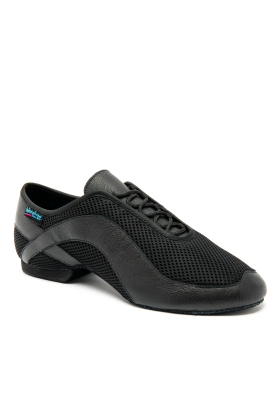
IDS - JAZZ - AIRMESH/BLACK
$198.00CAD $168.00CAD
Sale
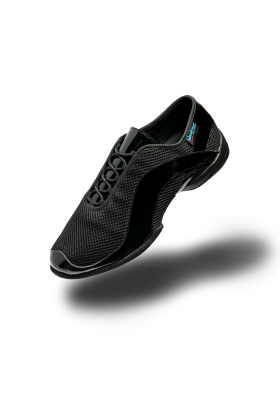
IDS - TEMPO - AIRMESH/BLACK PATENT
$229.00CAD $200.00CAD
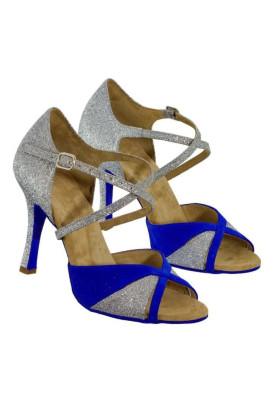
Galex - Emily - Heel - Slim 4-9 cm
$275.00CAD
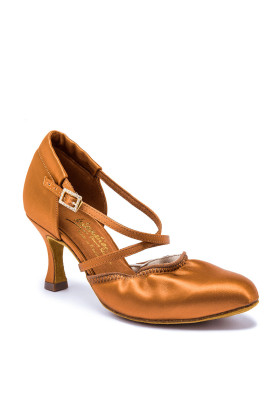
IDS - AMERICAN FLEX - TAN SATIN - 2" heel
$254.00CAD