


- 20 August, 2026
- 80
- 0
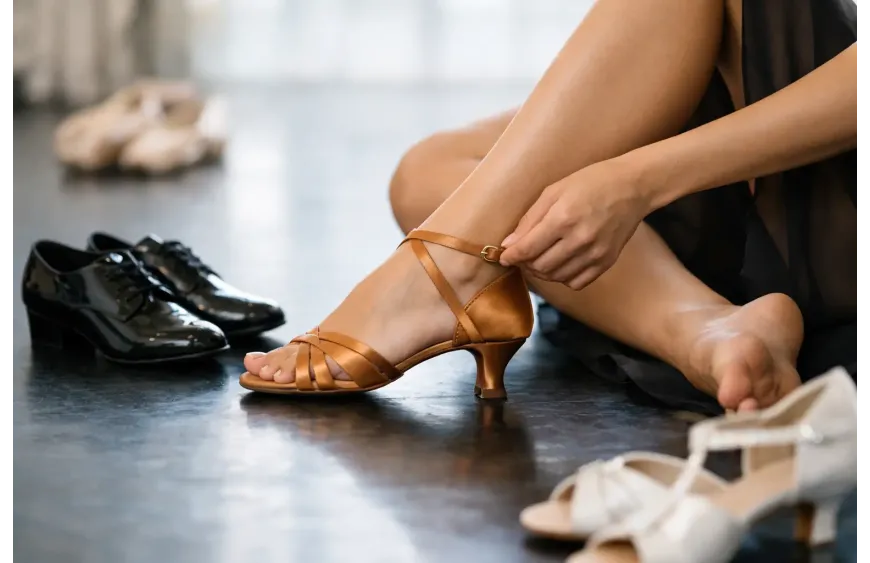
A beautiful dance shoe is not much help if your feet start aching halfway through a lesson. Searches for dance shoes with arch support, galex dance shoes with arch support usually come from dancers who want more than a pretty heel or a flexible sole. They want to feel stable, supported, and able to stay on the floor for practice, social dancing, teaching, or competition.
The right shoe can help, but arch support is only one part of a proper dance-shoe fit. Your dance style, foot shape, heel height, floor conditions, and the amount of time you dance all affect which pair will feel best. For ballroom and Latin dancers especially, the goal is controlled support without losing the articulation needed to point, roll through the foot, and respond to a partner.
What arch support means in a dance shoe
In everyday footwear, substantial arch support often comes from a firm, built-up insole. Dance footwear works differently. A dance shoe must allow the foot to communicate with the floor, particularly through the ball of the foot. Too much rigidity can make turns, Latin action, and ballroom movement feel restricted.
For that reason, supportive dance shoes usually combine a shaped or cushioned footbed with construction that helps the shoe hold its form beneath the arch. The level of support can vary greatly by style. A practice shoe may feel more cushioned and stable than a delicate competition sandal, while a standard ballroom pump may offer a different kind of security through its closed vamp and heel placement.
It is also useful to separate arch support from a shank. The shank is the supportive structure through the midfoot that helps a heeled shoe maintain its shape. It can make a shoe feel steadier, but it is not automatically the same as a contoured insole that supports your individual arch. Dancers with a very high arch, flat feet, plantar fascia discomfort, or a history of foot injuries may need more personalized advice from a qualified health professional as well as careful shoe fitting.
Galex dance shoes with arch support: what to look for
When considering Galex dance shoes with arch support, start with the construction details rather than assuming every style will feel the same. A support-focused shoe should feel secure through the middle of the foot without pressing painfully into the arch. It should support your alignment while still allowing you to rise, lower, point, and transfer weight naturally.
Look closely at the insole and the fit around the instep. A lightly padded or shaped insole can improve comfort during long classes and socials, especially if you are transitioning from street shoes to your first proper pair of dance shoes. The shoe should also sit close to the foot. If it shifts when you roll through a basic step, the support inside the shoe cannot do its job effectively.
The heel base matters, too. A well-positioned heel helps distribute pressure more predictably, while a secure heel cup keeps the rear of the foot from slipping. For ladies, a lower or broader heel can be a sensible choice when comfort and stability are the priority. For men, a correctly fitted ballroom or Latin shoe should hold the heel and midfoot firmly while leaving enough room for the toes to work.
A supportive style is not necessarily the best choice if it feels heavy or overly stiff for your discipline. Latin dancers often prefer more flexibility and a closer floor feel, while ballroom, smooth, social, and teaching dancers may value additional cushioning and stability. The right balance depends on how and where you dance.
Match the shoe to your dance style
A shoe that feels excellent for a two-hour ballroom class may not be the shoe you want for a Latin showcase. Before choosing, think about the movements you perform most often.
For ballroom standard and American smooth, closed-toe shoes or secure pumps often provide a more contained feeling around the foot. Dancers spend time moving backward, traveling through turns, and maintaining a clean connection with a partner. A stable heel and supportive midfoot can make long practice sessions more comfortable.
For Latin, salsa, and bachata, flexibility becomes more noticeable. Open-toe sandals and Latin shoes need to allow a strong point through the toe while staying snug enough for spins and directional changes. If a shoe has a more supportive footbed, make sure it does not stop you from using the ball of the foot correctly. Straps should feel secure, not tight enough to cause numbness or rubbing.
For social dance and teaching, comfort often deserves first place. You may be on your feet for several hours, demonstrate steps repeatedly, and dance with partners of different heights and skill levels. A supportive practice or social shoe with a moderate heel can be a practical addition to your dance bag, even if you keep a more specialized pair for performances.
A proper fit is more valuable than extra padding
Extra padding can feel wonderful for the first few minutes, but it cannot fix a shoe that is the wrong width, length, or shape. A dance shoe should be fitted more closely than a typical athletic shoe because it will stretch and mold with wear. That does not mean it should hurt.
Your heel should stay in place when you walk, rise, and take a few dance steps. The arch area should make contact without digging in. At the front, your toes should not be curled, crushed, or hanging over the sole. In an open-toe Latin shoe, a small amount of toe visibility is normal, but the foot should not slide forward so far that you lose stability.
Pay attention to width. A narrow shoe can create burning at the ball of the foot and make an otherwise supportive arch feel uncomfortable. A shoe that is too wide can allow the foot to drift, creating friction and reducing control. Different dancers may need a narrow, regular, or wider fit even when they wear the same street-shoe size.
Try your shoes later in the day if possible, when feet are more likely to be slightly swollen. Wear the type of hosiery or dance socks you expect to use. Then test the fit with movement: rise onto the balls of your feet, point and flex, take a few side steps, and check whether the heel slips or the straps pinch.
When an insert can help - and when it cannot
Some dancers ask whether they can add an orthotic or arch insert to a dance shoe. The answer depends on the shoe and the insert. A thin, low-profile insert may work in a roomier practice shoe, but many ballroom and Latin shoes are built with a close fit and limited internal space. Adding a thick insert can crowd the toes, raise the heel out of the heel cup, or change the way the shoe balances.
If you rely on a prescribed orthotic, bring that information into the fitting decision from the beginning. You may need a style with more volume, a lower heel, or a shoe reserved for classes and practice rather than a minimal competition shoe. Never force an insert into a shoe that becomes tight or unstable afterward.
For mild fatigue rather than a diagnosed foot condition, starting with a well-fitted supportive dance shoe, sensible heel height, and gradual break-in time is often the better first step. Rotating between pairs can also help if you dance several days a week.
Care keeps supportive shoes performing longer
Support features work best when the shoe is still structurally sound. Let dance shoes air out after class instead of leaving them in a closed bag. Check heel tips regularly, because worn heel caps can affect balance and put extra stress on the feet. Keep suede soles clean enough to provide controlled movement rather than unpredictable sticking or sliding.
If the insole has compressed flat, the lining is worn through, or the heel counter no longer holds your foot securely, it may be time to replace the pair. A shoe can still look presentable while no longer offering the support and stability you need.
For dancers in Toronto and the GTA who are uncertain about size, width, heel height, or whether a Galex style suits their dance routine, an in-person fitting can make the decision much clearer. Dancewear Champions can help you compare the feel of different dance-shoe constructions so you leave with footwear that supports your dancing, not footwear you have to fight through every song.
Tags dance shoes with arch support, galex dance shoes with arch support, galex dance shoes, dance shoes
Related Products
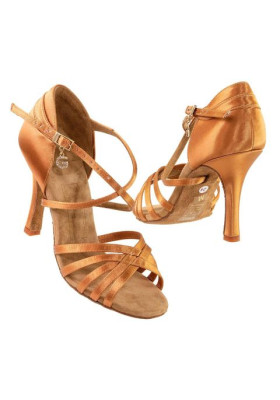
Galex - Emma - Tan-Satin - Heel - Slim 8cm
$238.00CAD
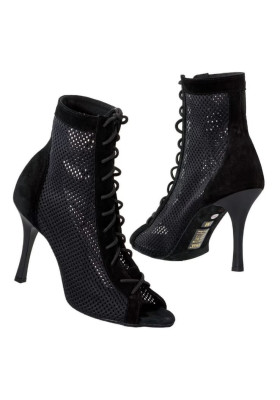
Galex - Victoria - Slim Heel
$275.00CAD
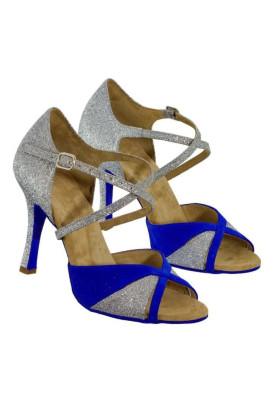
Galex - Emily - Heel - Slim 4-9 cm
$275.00CAD
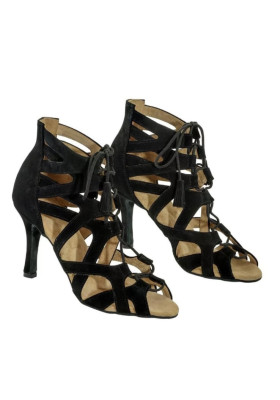
Galex - Bianka - Slim Heel
$275.00CAD
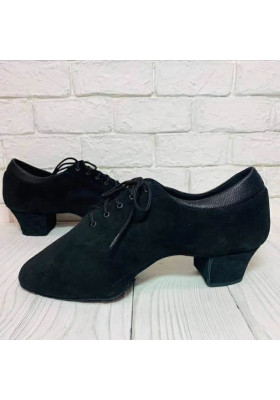
Galex - Black Nubuck - Heel 4cm
$250.00CAD
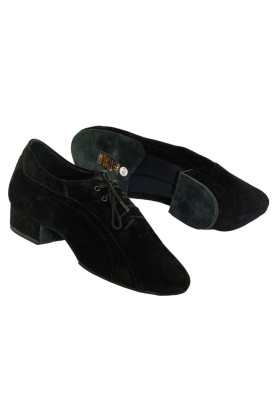
Galex - Black Nubuck - Heel 2cm
$250.00CAD
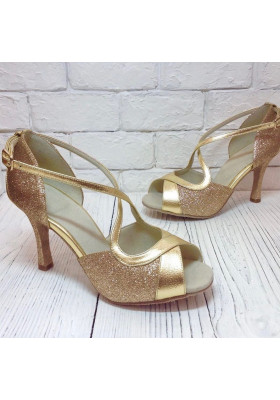
Galex - Gold - Heel - Slim 4-9 cm
$275.00CAD