


- 03 August, 2026
- 329
- 0
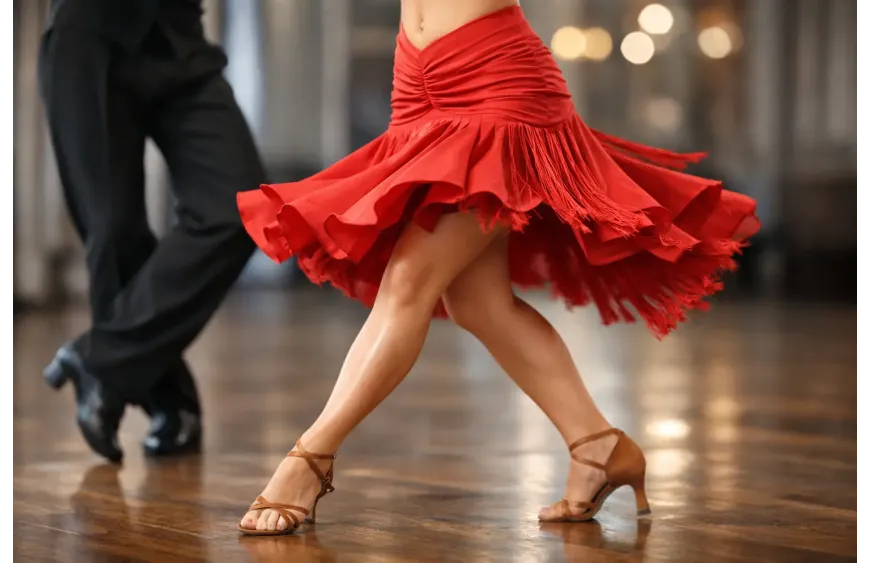
The right latin dance skirt does more than complete an outfit. It lets your hips move freely, makes rhythm visible, and helps you feel appropriately dressed whether you are heading to a salsa social, a weekly practice, a showcase, or a competition floor. The best choice is not always the shortest, sparkliest, or fullest skirt. It is the one that works with your dance style, your movement, and the setting.
For Latin dancers, clothing has a job to do. A skirt should stay comfortable through turns, settle well after spins, and give enough coverage and confidence for every movement. Once those basics are right, color, texture, fringe, and details become much easier to choose.
Start With Where You Will Wear Your Latin Dance Skirt
A skirt for practice has different priorities than one for a formal performance. Thinking about the occasion first prevents a common mistake: buying a beautiful skirt that feels too delicate for class or too casual for the event.
For regular lessons and teaching, look for comfortable stretch fabric, a secure waistband, and a shape that you can wear repeatedly. A simple black skirt, wrap style, or fitted skirt with a modest flare can pair easily with practice tops, bodysuits, or a basic dance top. These pieces are useful because they allow your instructor and partner to see your body action without creating distractions.
For salsa, bachata, and social Latin dancing, comfort still matters, but you have more room to show personality. A skirt with a slit, ruffle, asymmetrical hem, or light fringe can add movement without requiring full competition styling. Consider the venue, too. A crowded social floor calls for a skirt that stays close enough to the body that it will not catch on another dancer or get stepped on.
For showcases and DanceSport competition, visual impact becomes more important. Rhinestones, mesh panels, layered hems, fringe, and dramatic draping can emphasize each turn and hip action under stage or ballroom lighting. Competition rules, age category requirements, and event dress codes may affect what is appropriate, especially for youth dancers. When in doubt, confirm the event requirements before choosing a costume-ready skirt.
Choose a Shape That Supports Your Movement
Latin skirts come in many silhouettes, and each creates a different line on the dance floor. The goal is not to hide movement. It is to frame it.
A fitted pencil or straight skirt gives a clean, polished look and works well for practice, social dancing, and routines that need a sleek profile. Choose one with stretch fabric, a side slit, back slit, or shaped hem so your stride is not restricted. A skirt that looks streamlined while standing but pulls across the hips during a basic step will quickly become frustrating.
A flared skirt creates more swing and can feel especially lively for cha-cha, jive, salsa, and upbeat routines. Short circle-inspired shapes move easily, while handkerchief and asymmetrical hems create motion from several angles. These styles are often forgiving for dancers who want more freedom through the legs, although very full skirts can occasionally twist or lift during fast turns.
Fringe skirts are a Latin classic for a reason. Fringe reacts to hip action, body rhythm, and sharp changes of direction, making movement easier to see. The trade-off is that fringe needs attention. It can tangle, flatten in storage, or catch on jewelry if the garment is not handled carefully. A fringe skirt is often worth it for performance, but a simpler style may be more practical for frequent classes.
Wrap skirts and layered designs offer adjustable-looking lines and soft movement. They can be flattering across many body types, but they should be tested during turns. Make sure the overlap remains secure and provides the coverage you expect when the skirt opens with motion.
Think About Length From Every Angle
A hem that looks perfect in a mirror may behave differently when you spin, lunge, or dance with a partner. Before committing to a length, raise your knees slightly, take a few side steps, rotate through a turn, and check the back view if possible.
Shorter skirts can make leg action more visible and are popular for Latin styles. They also require you to feel secure in the built-in brief, bodysuit, or shorts underneath. If you prefer more coverage, an asymmetrical design, a longer back hem, or a layered skirt can provide movement without leaving you exposed.
Midi and knee-length skirts can work beautifully for practice, teaching, and social settings. They are often a comfortable option for dancers who do not want a very short silhouette. Just make sure the hem does not interfere with footwork or brush against your Latin shoes during quick steps.
Fit Matters More Than the Size on the Tag
Dancewear should fit differently from everyday clothing. A latin dance skirt needs to stay in place while you move, but it should not dig into your waist, flatten your breathing, or restrict your hips.
Start at the waistband. Elastic waistbands are easy to wear and can offer flexibility during long classes. A wide waistband may feel smoother and more supportive, while a narrow waistband can create a lighter, less visible finish under a cropped top or bodysuit. If the waistband rolls, slides down, or feels tight when you sit and move, try another cut or size.
Next, check the hips and upper thighs. Fitted styles should skim the body rather than squeeze it. Stretch is useful, but too much tension can make the fabric ride up during turns. For skirts with mesh, cutouts, or draped panels, make sure those details lie where they are intended to lie when you are in dance posture, not only when standing casually.
Built-in briefs can make a skirt feel secure and ready for performance. They are particularly helpful with short hems, fringe, and high slits. If a skirt does not include briefs, choose dance shorts or a bodysuit that stays smooth underneath. The best underlayer is one you forget you are wearing.
Sizing varies between dancewear brands, so measurements are more reliable than assuming your usual street-clothing size. Use the garment size chart when available, especially for fitted performance pieces. For local dancers in Thornhill, Toronto, and the GTA, an in-person fitting can be especially helpful when comparing Latin skirt cuts with the shoes and tops you plan to wear.
Pick Fabrics and Details With Purpose
Stretch knit fabrics are reliable for practice because they are comfortable, easy to move in, and generally simple to care for. They work well in classic black and rich colors, and they can be dressed up with a statement top, earrings, or a belt detail when needed.
Mesh adds breathability and visual contrast. It can create a lighter look around the legs or waist, but quality and placement matter. A mesh panel should recover its shape after movement and feel comfortable against your skin. If you are wearing a skirt for long social nights, avoid any trim that scratches, pinches, or catches easily.
Ruffles, drapes, and layered fabrics create softness and motion. They are a strong choice for dancers who want the skirt to respond to spins without relying on fringe. Rhinestones and crystals add stage presence, but they are less necessary for class and can require more careful storage. Keep embellished garments away from rough bags, sharp accessories, and anything that may snag delicate fabric.
Color is also functional. Black is versatile, forgiving, and easy to coordinate. Red, cobalt, emerald, animal print, and metallic shades create stronger visual energy, particularly for performances. If you are building your first Latin wardrobe, begin with one skirt that pairs with several tops, then add a more expressive piece when you know what styles make you feel most confident.
Style the Skirt as a Complete Dance Outfit
A Latin skirt performs best when the rest of the outfit supports its line. A fitted bodysuit or dance top balances a fuller skirt, while a simple skirt can handle a more detailed top with mesh, sparkle, or an open-back design. Avoid combining too many moving elements at once. For example, a heavily fringed skirt and an equally fringed top can look busy rather than intentional.
Your shoes matter, too. Latin dance shoes should allow secure foot placement and complement the outfit without competing with it. Tan and nude shoes lengthen the leg visually, while black shoes can create a cohesive line with a black skirt. For social dancing, prioritize a heel height and fit that let you dance comfortably for the entire evening.
Before an event, wear the full outfit at home for a few minutes. Practice a basic, a turn, and a few larger steps. This quick test reveals whether a waistband shifts, a slit opens too far, fringe catches, or a top and skirt overlap awkwardly.
Care for the Skirt You Want to Keep Dancing In
Always check the care label, particularly on fringe, mesh, and embellished designs. Many dance skirts benefit from gentle hand washing or careful machine washing in a garment bag, followed by air drying. Heat can damage elastic fibers, adhesives, and decorative details.
Store fringe and embellished skirts flat or hanging with enough space around them. Do not compress them tightly in a dance bag for weeks at a time. If you travel with a performance skirt, turn it inside out when appropriate and keep jewelry, buckles, and shoe heels separate from delicate fabric.
The right skirt should make you want to take another turn, not make you worry about adjusting your outfit. Choose the style that feels secure, moves honestly with your body, and suits the kind of dancer you are becoming.
-280x400.jpg "Ballroom Skirt 24")
-280x400.jpg "Ballroom Skirt 29")
