


- 14 October, 2026
- 13
- 0
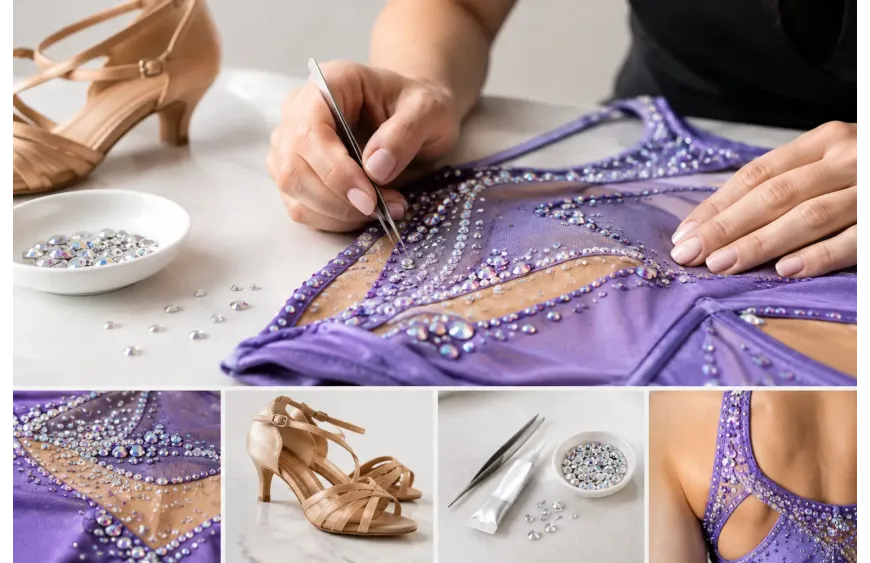
A missing rhinestone can be surprisingly obvious under ballroom or Latin competition lighting. Whether it is one crystal at the neckline or a small gap in a heavily stoned skirt, knowing how to repair dance rhinestones lets you restore the finished look without damaging delicate stretch fabric, mesh, fringe, or appliqué.
The key is not simply adding a replacement stone. You need the correct size, color, backing, adhesive, and application method for the garment. A rushed repair with too much glue can leave a cloudy mark that stands out more than the missing crystal.
Start by identifying the stone and the garment
Before reaching for glue, look closely at the surrounding rhinestones. Replacement stones should match as closely as possible in size, shape, color, and finish. A clear crystal beside an aurora borealis crystal, for example, may look different once it catches stage light. Likewise, a round stone can interrupt a pattern made with pointed oval, teardrop, or square stones.
Measure the missing rhinestone against a nearby one if you can. Dance rhinestones are often sized in millimeters or by stone-size measurements, and even a small difference can be noticeable in a clean row or detailed design. If the garment has several loose stones, set aside a few matching replacements before beginning.
Then consider the fabric. A ballroom gown may combine stretch velvet, chiffon, mesh, and appliqué in one area. Latin dresses commonly use stretch knit, mesh, lace, fringe, or bodysuit fabrics. These materials react differently to adhesive and heat. A repair that works beautifully on a sturdy practice top may not be suitable for a delicate sheer sleeve.
Choose the right repair method
Most dance costumes use either flat-back rhinestones attached with glue or hot-fix rhinestones applied with heat. Check the stones around the missing area before choosing your method.
Flat-back stones have a smooth foil backing and are attached with a small amount of jewelry or fabric adhesive. They are common on competition costumes because they can be placed precisely on curved seams, mesh, and decorative appliqués. For a missing flat-back stone, use an adhesive made for rhinestones and flexible fabric. The glue needs to remain flexible after drying so it can move with the garment during dancing.
Hot-fix stones have heat-activated glue on the back. They are often used on costumes, warm-up wear, and dance accessories, but they need a heat-setting tool or carefully controlled iron application. Avoid using a household iron directly on a finished costume unless you are certain the fabric can tolerate it. Heat can damage synthetic mesh, flatten velvet, melt trims, or loosen nearby glued stones.
If you are not sure which type you have, do not guess. A small test on an inconspicuous area of matching fabric can prevent a much larger repair problem.
What to avoid
Avoid super glue, craft glue that dries hard, and adhesives that are not intended for fabric or rhinestones. They can soak through mesh, discolor light-colored material, create stiff patches, or leave a white haze around the stone. Hot glue is also usually too bulky for dancewear and may release when the costume stretches or warms up under lights.
How to repair dance rhinestones step by step
Set up on a clean, flat surface with good light. Place a towel or soft cloth beneath the garment so the fabric is supported and protected. If you are repairing a fitted Latin dress or bodysuit, gently position the area so it lies flat without pulling the fabric out of shape.
First, remove any remaining dried glue from the empty spot. Use a wooden toothpick, fine tweezers, or a wax pickup tool to lift away loose residue. Work slowly. Scraping aggressively can snag mesh or pull threads from satin and stretch fabric.
Next, place a tiny dot of rhinestone adhesive exactly where the stone will sit. Less is usually better. The adhesive should spread slightly to the edges once the rhinestone is pressed down, but it should not form a visible ring around it. For very small stones, use a toothpick or precision-tip applicator rather than squeezing glue directly from the bottle.
Pick up the rhinestone with a wax pencil, pickup tool, or clean tweezers. Place it straight down into the glue and press gently. Do not slide the stone around once it touches the adhesive, especially on mesh or fabric with a visible nap. Check that the facets face upward and that the stone follows the direction of the surrounding pattern.
Let the garment lie flat while the adhesive cures. Drying times vary by product, but do not wear, pack, fold, or stretch the item until the glue is fully set. If you need the costume for a competition, showcase, or social dance event, complete repairs at least a day ahead whenever possible.
Repairing stones on mesh, fringe, and stretch fabric
Mesh is one of the most common areas for lost rhinestones because it moves constantly. The safest approach is to support the mesh from underneath with a smooth, firm surface while you work. A piece of clean plastic packaging, a small acrylic board, or a card wrapped in plastic can keep glue from soaking through and bonding the front and back layers together.
Use very little adhesive on mesh. Excess glue can spread through the weave and leave a dark or shiny spot. After placing the rhinestone, keep the fabric flat until the adhesive has begun to set.
Fringe requires a different approach. If a rhinestone was attached directly to a fringe strand, check whether the strand is intact before replacing it. A heavy stone can pull a damaged strand down further. Sometimes the better repair is to secure or replace the fringe first, then add the stone once the trim is stable.
For stretch fabric, do not repair while the material is stretched tight. Apply the rhinestone with the garment relaxed and flat. If you glue a stone onto fully stretched fabric, it may buckle, shift, or pop off when the garment returns to its normal shape.
When more than one rhinestone is missing
A few missing stones in one spot may signal that the adhesive is failing across a larger area. Check nearby rhinestones gently with a fingertip. Do not pull on them, but notice whether they move, lift at the edge, or look dull because the foil backing has worn away.
If several stones are loose, repair them in sections rather than trying to redo the entire costume in one sitting. Start with high-visibility areas: the neckline, center front, waist, hip line, cuffs, and back details that show during turns. On a ballroom gown, inspect the areas that brush against the skirt, floats, jewelry, or partner contact points. On a Latin costume, check the hip and fringe zones where movement is strongest.
It can also be smart to carry a small costume repair kit to events. Keep matching rhinestones, a precision adhesive, a pickup tool, tweezers, and a small protective cloth in a sealed pouch. This is especially useful for youth dancers, showcase performers, and competitors changing between rounds.
Protect rhinestones between performances
Rhinestone repairs last longer when the garment is packed carefully. Let the costume air out after dancing, then place it in a garment bag or protective costume bag rather than folding it tightly with shoes, jewelry, or makeup. Avoid hanging a heavily stoned gown by thin straps for long periods, since the weight can distort the fabric.
Hand washing is usually gentler than machine washing for stoned dancewear, but always follow the garment care instructions. Turn the item inside out when appropriate, avoid twisting it, and never place rhinestone costumes in a dryer. Heat, friction, and harsh detergents can weaken adhesive and dull the finish of the stones.
A costume does not need to look brand-new to look polished. A careful repair, a close color match, and enough curing time can return a favorite Latin dress or ballroom gown to the floor with confidence. Before your next event, take five quiet minutes under bright light to inspect your costume - the tiny details are often what make the whole look feel ready to perform.