


- 25 September, 2026
- 5
- 0
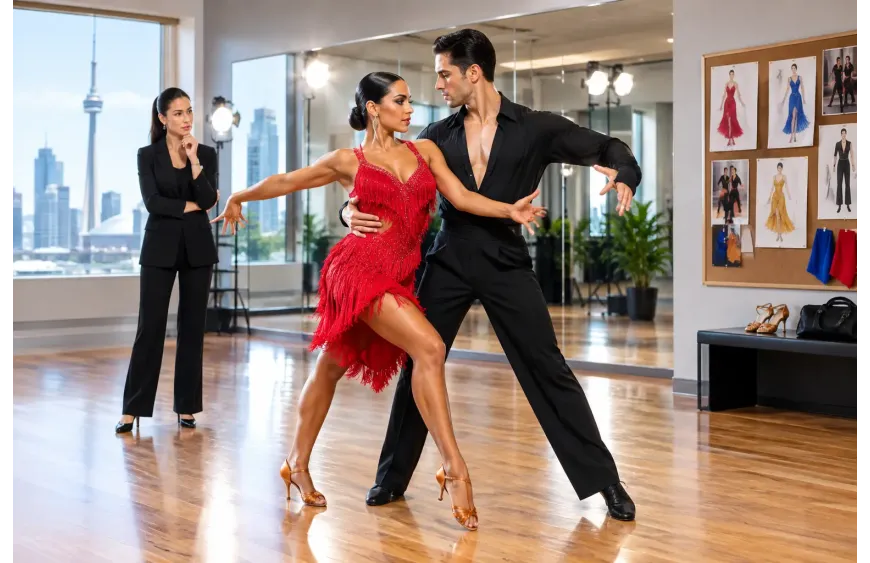
A rhinestone-heavy gown can look spectacular under ballroom lights, but if the hem catches a heel on the first traveling turn, it is not the right costume. This Toronto DanceSport costume example starts with a more useful question: what does the dancer need to do on the floor, and what should the judges and audience see?
For competition, a costume is not simply a dressy outfit. It supports the shape of the dance, stays secure through repeated movement, and creates a polished first impression from across the room. The best choice depends on whether you dance Latin, Standard, American Smooth, or a youth category, as well as your event rules, partnership, and personal comfort.
A Toronto DanceSport Costume Example for Latin
Imagine an adult Latin competitor preparing for cha-cha, rumba, samba, paso doble, and jive. She chooses a fitted black bodysuit with a high-quality stretch base, a V-shaped neckline that stays flat against the body, and a built-in brief for confident movement. The costume is finished with a short asymmetrical skirt that opens at the hip, creating clear leg action without covering the dancer’s lines.
Rather than adding rhinestones everywhere, the design places sparkle strategically: along the neckline, across one shoulder, and in a diagonal sweep from the waist to the skirt. Under competition lighting, this placement draws the eye through the torso and emphasizes Latin motion. A light mesh sleeve on one arm adds drama while leaving the other shoulder bare for contrast.
The finishing details matter. The dancer wears a secure tan Latin shoe with a heel height she can control, hair styled away from the face, and jewelry that will not snag a partner’s shirt or costume. Every element has a purpose. The skirt reacts to hip movement, the bodysuit remains in place, and the embellishment supports the design instead of weighing it down.
This is one example, not a formula. A dancer who prefers more coverage may choose a longer fringe skirt, a mesh overlay, or a sleeve on both arms. A taller dancer may prefer a visual break at the waist, while a petite dancer may favor a higher leg line and a cleaner, more vertical design. The goal is not to copy another competitor. It is to choose a costume that makes your own dancing visible.
Why this Latin costume works
Latin costumes need controlled movement. Fringe, floats, layered skirt panels, and stones can all look beautiful, but they should respond to the body rather than compete with it. A heavily beaded skirt may create impact for rumba, for example, yet feel too heavy for fast jive action. A very short skirt can showcase strong legs but may require more attention to secure fit and event guidelines.
Color changes the effect as well. Black with crystal detail can feel sharp and sophisticated. Red can amplify drama, especially for paso doble. Bright jewel tones are often highly visible on a busy competition floor. Skin-tone mesh should match as closely as possible when used to create the illusion of an open back, neckline, or sleeve.
Before committing to any Latin look, test it properly. Practice spins, kicks, walks, arm styling, and a full round of your fastest dance. Sit down, raise your arms, and dance with your partner. If a strap slides, a stone edge scratches, or the skirt twists around your hips, solve it before competition day.
How a Standard Costume Tells a Different Story
A ballroom or International Standard costume has a different job. Instead of spotlighting isolated hip action and fast leg movement, it should complement a longer frame, continuous travel, and the sweeping character of waltz, tango, Viennese waltz, foxtrot, and quickstep.
Picture a Standard dancer in a deep sapphire gown with a fitted upper body, a supportive waistband, and a full skirt that begins to move from the hips rather than the knees. The gown includes soft chiffon floats attached from wrist to back, allowing them to trail through turns without restricting the dance hold. Stones are concentrated on the bodice and cuffs, where they frame the upper body and catch light during rotation.
The hem is carefully chosen. It should skim the floor attractively without being so long that it gets caught beneath a shoe. A gown may look elegant standing still but behave differently in a natural turn or a quickstep run. Testing it in proper ballroom shoes is essential, particularly when the skirt includes multiple layers, horsehair trim, or floats.
A Standard costume also needs to work in partnership. The neckline, shoulder design, and back should allow a comfortable closed hold. Bulky decoration near the shoulder or underarm can interfere with connection. Floats should be attached securely and positioned so they enhance movement without tangling around the partner’s arm.
Start With Division Rules, Then Build the Look
The most beautiful costume is only useful if it is appropriate for the division. DanceSport dress rules can differ by age category, level, style, and organizer. Juvenile and youth dancers may have restrictions on colors, fabrics, cut, embellishment, makeup, or accessories. Adults may have more freedom, but requirements can still change from one event to another.
Parents purchasing a Juvenile Competition Dress should think beyond appearance. A young dancer needs a costume that feels comfortable, allows a full range of motion, and can handle warm-up time, multiple rounds, and quick changes. A simpler, well-fitted dress can be more effective than a complicated design that demands constant adjustment.
Check the event information before adding stones, fringe, gloves, floats, or dramatic cutouts. If there is any uncertainty, choose a more conservative option or ask for guidance before the costume is altered. It is much easier to add approved details later than to remove expensive embellishment at the last minute.
Fit Is the Difference Between Costume and Distraction
A competition costume should feel secure before it feels glamorous. The torso is the priority because it anchors everything else. If the bodice rides up, gaps at the bust, or shifts during arm movement, the dancer will spend mental energy adjusting it instead of performing.
Look for stretch fabrics with recovery, supportive linings, reliable closures, and construction that matches the intensity of the dance. A costume for a showcase may only be worn for one routine. A DanceSport garment may need to withstand several rounds, travel, steaming, and repeated use. Those are different needs.
Bring your actual dance shoes when trying on costumes. Heel height affects posture, skirt length, and where the body carries weight. If possible, move in the costume with the undergarments or dance basewear you plan to wear on the day. This is especially useful for open-back, mesh, and light-color designs, where the wrong foundation can show through under bright lights.
For dancers in the Toronto and GTA area, a personal fitting can take much of the guesswork out of the process. Dancewear Champions can help dancers compare silhouettes, consider practice needs, and find a fit that supports both the dance and the individual wearing it.
Keep the Full Competition Look Cohesive
Costume, shoes, hair, and accessories should read as one intentional look. That does not mean every item must match perfectly. It means the choices should support the same visual direction. A sleek black Latin costume may need a clean hairstyle and minimal jewelry, while a soft pastel ballroom gown can suit a more romantic updo and delicate crystal accents.
Avoid treating accessories as an afterthought. Loose earrings, bracelets that catch on floats, or a necklace that shifts during spins can become a distraction. The same applies to shoe care. Clean soles, secure straps, and a properly fitted pair of dance shoes help complete the presentation while protecting movement quality.
A final dress rehearsal is worth the time. Wear the complete costume, shoes, hair accessories, and any practice jewelry. Dance at full energy, preferably with your partner. Notice what moves beautifully and what needs attention. A small repair, a better strap adjustment, or a shortened hem can make a major difference once the music begins.
Choose a costume that lets your technique, confidence, and partnership come forward. When the fit is secure and the design suits the dance, you can stop worrying about the outfit and put your focus where it belongs: on the floor.
Tags DanceSport costume, DanceSport costume Latin and ballroom dancers
Related Products

Sale
Performance Latin Dress 03
$2,000.00CAD $1,499.00CAD

Sale
Performance Latin Dress 12
$1,600.00CAD $799.99CAD

Sale
Performance Latin Dress 13
$700.00CAD $350.00CAD

Performance Latin Dress 14
$1,800.00CAD