

- 04 September, 2026
- 19
- 0
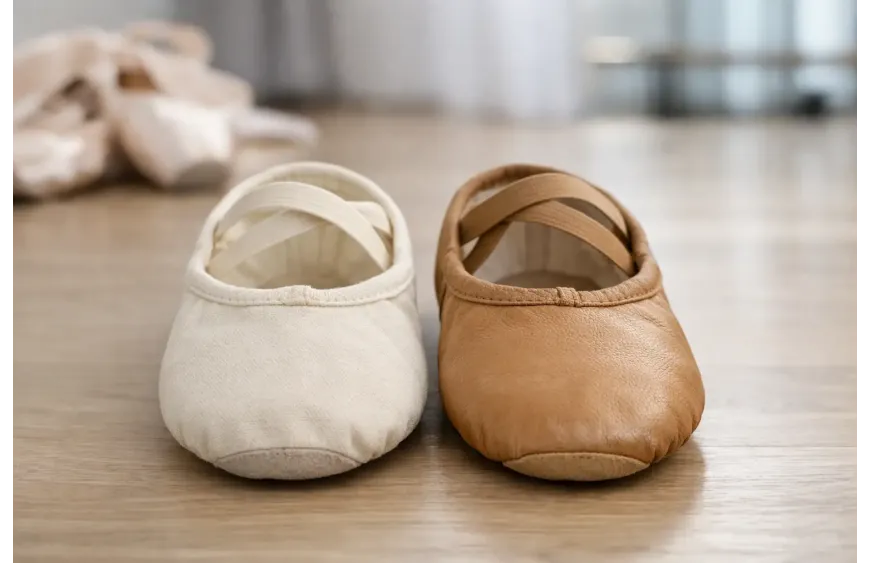
A ballet slipper can look simple, but the material changes how a dancer feels at the barre, across the floor, and after a long class. When choosing canvas versus leather ballet slippers, the right answer is not simply which one looks best. It depends on the dancer’s age, foot shape, training schedule, studio expectations, and whether the shoe is needed for class, rehearsal, or performance.
For a first pair, comfort and correct fit usually matter more than choosing the most traditional material. For experienced dancers, the decision often comes down to the feedback they want from the floor and how quickly they need the shoe to mold to their foot.
Canvas Versus Leather Ballet Slippers: The Core Difference
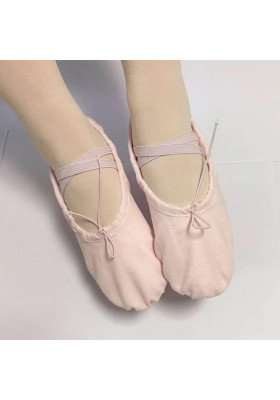
Canvas slippers are made from a woven fabric that feels light, flexible, and close to the foot from the first wear. Leather slippers are made from soft natural leather, usually with a more structured feel that gradually adapts to the dancer’s foot. Both are standard, appropriate choices for ballet training.
Canvas is often the practical favorite for dancers who want a streamlined shoe with very little break-in time. The fabric sits smoothly over the toes and arch, and many dancers appreciate how easily it shows the shape and articulation of the foot. It is also a popular choice for warm studios, summer programs, and dancers who prefer a lighter feeling on the foot.
Leather has a classic appearance and a supportive, substantial feel. It may feel firmer at first, particularly across the toes and sides of the foot, but it often becomes more personalized with wear. Many young dancers and parents appreciate its durability, while adult beginners may like the slightly more protected feeling it provides.
Neither material makes a dancer better. The best ballet slipper is the one that allows the toes to lie flat, the heel to stay in place, and the foot to point and flex without unnecessary pulling or excess fabric.
Why Dancers Choose Canvas Ballet Slippers
Canvas ballet slippers are lightweight and flexible. They tend to hug the foot without requiring a lengthy break-in period, which can make them especially appealing for new dancers who are still getting used to working through the feet and maintaining turnout.
Because canvas is thin, dancers usually receive clear feedback from the floor. That awareness can be useful when learning to distribute weight correctly through the toes, ball of the foot, and heel. The material also creates a clean, low-profile line under tights, making it a frequent choice for classes and some performance settings.
Canvas can be a good match for dancers with narrow or low-volume feet, although fit varies significantly by brand and style. A slipper that is too wide can bunch under the arch or create folds at the heel, even if the length seems correct. Dancers with a fuller foot may prefer a stretch canvas style, which offers flexibility while accommodating more volume through the metatarsal area.
Canvas does have trade-offs. It generally wears through faster than leather, particularly for dancers who train multiple times a week or drag the toes during tendus and floor work. It can also show dirt more readily, especially in lighter shades. Some canvas slippers can be gently hand-washed, but dancers should always follow the care instructions for their specific shoe. Improper washing can shrink the fabric, affect the glue, or change the shape of the sole.
When Leather Ballet Slippers Make Sense
Leather ballet slippers are valued for their resilience. The upper usually handles regular studio use well, making leather a sensible option for active children, dancers who rehearse often, or families looking for a shoe that may last longer between replacements.
A leather slipper offers a little more resistance than canvas. For some dancers, that resistance feels supportive and reassuring. For others, especially those who want a barely-there shoe, it can feel less immediate at first. Leather typically softens as it warms to the foot, so a properly fitted pair should become more comfortable with use without starting out painfully tight.
Leather can be particularly helpful for younger students who are tough on footwear. It is less likely to develop holes quickly at the toes, although suede sole pads will still wear over time. It is also less likely to become misshapen from light moisture than canvas, but leather should never be soaked or machine-washed. Let shoes air-dry fully after class, away from direct heat.
The material’s durability does not mean dancers should size up. A leather slipper that is too large will not become secure just because the material eventually molds to the foot. Extra length can interfere with pointing, while a loose heel may slip off during jumps or traveling combinations.
Fit Matters More Than Material Alone
A well-fitted ballet slipper should look smooth when the foot is flat and when it is pointed. The toes should reach the end without curling or feeling compressed. The heel should stay covered, and the drawstring or elastic should not be used to force an oversized shoe to fit.
Dancers and parents should also consider width. A shoe can be the correct length but still be wrong if it pinches across the metatarsals or leaves excess material at the sides. Leather may relax slightly with wear, while canvas may offer less change unless it includes stretch fibers. That is why the initial fit should be close, secure, and comfortable rather than based only on a street-shoe size.
Elastic placement matters, too. Many ballet slippers come with pre-sewn elastics, while others allow the dancer to sew elastics in a position that feels most secure. For younger dancers, pre-sewn elastic can be convenient. For a dancer with a particularly narrow heel or high arch, customized elastic placement may improve security.
If the slipper has a drawstring, tuck the knot neatly inside the shoe. Never wrap or tie it around the ankle. A drawstring is only for small adjustments at the opening, not for correcting a poor fit.
Full Sole or Split Sole: A Separate Choice
Material and sole construction are related decisions, but they are not the same thing. Both canvas and leather ballet slippers are available with full soles or split soles.
A full-sole slipper has suede under the front of the foot and heel, connected by material through the arch. It can provide a traditional feel and is commonly selected for beginner ballet students. Many teachers prefer full soles for young dancers because the shoe offers a clear, stable foundation while they learn basic foot placement.
A split-sole slipper has separate suede pads under the ball of the foot and heel. It gives a more contoured appearance through the arch and allows the shoe to follow the foot closely when pointed. Intermediate and advanced dancers often prefer split soles, though a beginner may also wear one if it is permitted by the studio and fitted correctly.
Before purchasing, check the class dress code. Some programs specify not only the color of the slipper but also whether students need leather, canvas, full sole, or split sole. A beautiful shoe that does not meet the instructor’s requirements can create an unnecessary replacement purchase.
Choosing for Children, Teens, and Adults
For children starting ballet, leather full-sole slippers are often a practical, durable choice, particularly when classes are weekly and the dancer is still developing control and coordination. Canvas full-sole slippers can work equally well when a studio requests them or when the child strongly prefers a lighter fit.
Teens who attend more frequent classes may lean toward canvas, especially split-sole styles, because they want flexibility and a closer foot line. However, leather remains a strong choice for dancers who need a shoe that can handle demanding use.
Adult beginners should not assume they need the same slipper as a child. Adults may prefer canvas for its immediate softness, while others feel more confident in leather. Foot sensitivity, arch shape, prior injuries, and personal comfort all deserve consideration. A dancer returning to ballet after time away may also appreciate trying more than one material over the course of training.
Care Helps Every Pair Last Longer
Take slippers out of a dance bag after class so moisture can evaporate. Avoid wearing ballet slippers outdoors, where pavement quickly damages the suede sole and tracks debris into the studio. Keep separate pairs for class and performance when possible, especially if a clean presentation matters.
Leather benefits from being allowed to dry naturally and stored flat. Canvas should be kept clean and dry, with washing handled only according to the manufacturer’s directions. Replace either material when holes expose the toes, sole pads become dangerously thin, elastics no longer hold securely, or the fit has changed because of growth.
The choice between canvas and leather is a personal one, but it should never feel like guesswork. Bring the dancer’s class requirements, current shoe size, and honest feedback about comfort to a proper fitting. A few minutes spent checking length, width, heel security, and movement can make every plié and tendu feel more confident.