

- 26 October, 2026
- 19
- 0
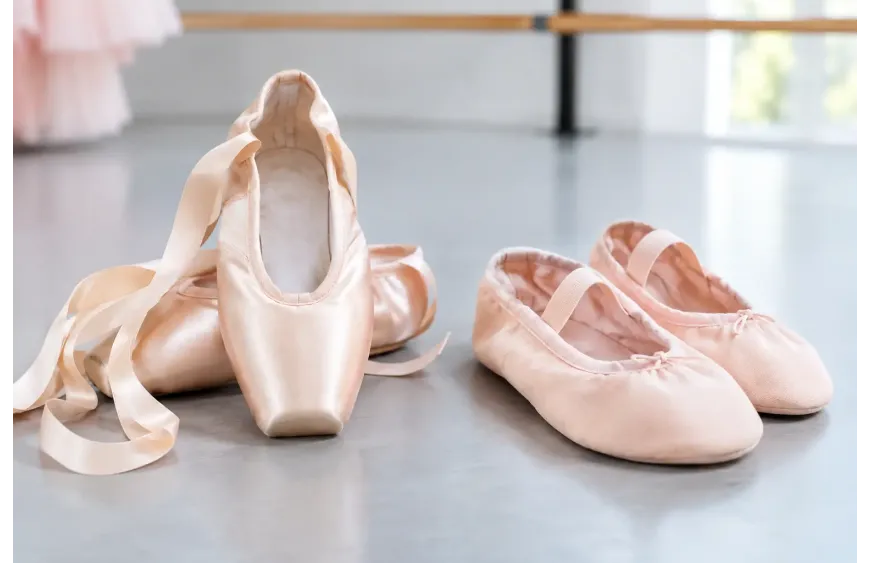
A ballet slipper lets a dancer feel the floor, point through the toes, and build the technique that comes before more advanced work. A pointe shoe has a completely different job: it is a structured piece of equipment designed to support a trained dancer while standing and moving on the tips of the toes. Understanding pointe shoes versus ballet slippers helps parents, adult beginners, and young dancers buy the right footwear for class without rushing an important milestone.
Pointe Shoes Versus Ballet Slippers: The Core Difference
Ballet slippers are soft shoes worn for most ballet classes, from a child’s first plié through advanced barre and center work. They are usually made of canvas or leather, with a thin sole that allows the foot to articulate. A well-fitted slipper should follow the shape of the foot closely without pinching, bunching, or sliding at the heel.
Pointe shoes are worn by dancers who have developed the strength, alignment, and training required for pointe work. Instead of a flexible, thin sole, they contain a firm inner structure. This structure supports the foot when the dancer rises fully onto the tips of the toes, a position called en pointe.
Neither shoe is simply a more expensive or more advanced version of the other. They serve different stages and demands of ballet training. A dancer can perform beautifully in ballet slippers for years, while pointe shoes should only enter the picture when a qualified teacher determines that the dancer is ready.
How Ballet Slippers Are Built
A ballet slipper is designed for mobility and floor connection. The upper is soft, so the foot can stretch, point, flex, and show its lines. Leather slippers tend to be durable and offer a little more resistance, while canvas styles are lightweight, breathable, and often create a clean, streamlined look on the foot.
The sole may be full or split. A full-sole ballet slipper has one continuous piece of suede under the foot. It is a traditional choice for younger dancers because it provides gentle resistance and makes the dancer work through the foot. A split-sole slipper has separate suede pads under the ball of the foot and heel. This style can emphasize the arch and is popular with intermediate and advanced dancers, although the right choice often comes down to a teacher’s preference and the dancer’s foot.
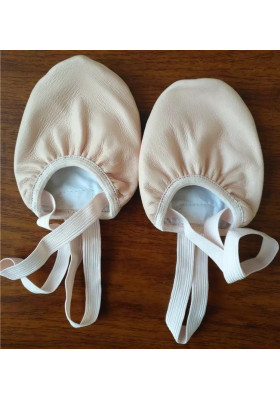
Most ballet slippers use elastic to help hold the shoe in place. Some arrive with elastics attached, while others allow the dancer or parent to sew them in a position that feels secure. The shoe should be snug enough that excess material does not gather under the toes, but not so tight that it restricts movement or causes discomfort.
What Ballet Slippers Do Best
Ballet slippers support the work dancers need every day: learning placement, strengthening the feet, improving balance, and developing control. Because the sole is thin, dancers receive clear feedback from the floor. That feedback matters when learning to distribute weight properly through the toes, ball of the foot, and heel.
They are also practical for studio life. Slippers are lighter, easier to put on, and far less restrictive than pointe shoes. For recreational ballet, pre-pointe classes, school performances, and regular technique training, they are typically the appropriate shoe unless the instructor says otherwise.
What Makes Pointe Shoes Different
The distinctive parts of a pointe shoe are what allow a dancer to work en pointe. At the front is the box, a firm casing that surrounds and supports the toes. The flat surface at the very tip is called the platform. A dancer balances on this small area when fully en pointe.
Inside the shoe is the shank, a reinforced structure under the arch that helps support the foot. Shanks come in different strengths and lengths. A dancer with a flexible foot, for example, may need a different level of support than a dancer whose foot is less flexible. The vamp, or upper part of the box, also varies in height and shape, affecting how the shoe feels and how easily the dancer can rise onto pointe.
Pointe shoes are traditionally finished with ribbons and elastic, which are sewn onto the shoe for a secure fit around the ankle. They are not intended to function like everyday footwear. Walking around a studio lobby, outside, or on rough flooring in pointe shoes can damage them and is not safe for the dancer.
Pointe Shoes Do Not Make Pointe Work Safe on Their Own
A pointe shoe supports trained technique. It does not create it. If a dancer lacks the necessary strength in the feet, ankles, legs, core, and back, the shoe cannot compensate. In fact, starting too early can place unnecessary stress on growing bones, joints, tendons, and toenails.
Readiness depends on more than age. A teacher will consider how long the dancer has trained consistently, their ability to maintain alignment, the strength of their ankles and legs, their control at the barre, and how they use turnout. Some dancers are ready earlier than others, while some need more time. The correct answer is always the one that protects the dancer’s long-term development.
Fit Is Important for Both, but Critical for Pointe
A ballet slipper should fit like a second skin, with toes lying flat and the heel fully contained. There should not be growing room at the end. Loose slippers can make it harder to point the foot clearly and may shift during turns or jumps. Since fit can vary by material and foot shape, trying a few suitable styles is often worthwhile.
Pointe shoe fitting requires far more precision. A qualified pointe shoe fitter evaluates the shape and length of the toes, width of the forefoot, heel shape, arch, ankle mobility, and how the dancer stands and moves. The goal is not simply to find the most comfortable shoe while flat. The shoe must also provide proper support and alignment when the dancer rises en pointe.
A shoe that is too wide may allow the foot to sink into the box. One that is too narrow can compress the toes painfully. A shank that is too hard may prevent the dancer from rolling through the shoe, while one that is too soft may fail to offer enough support. Even dancers with similar shoe sizes can need very different pointe shoe models.
For this reason, dancers should not order a first pair of pointe shoes based only on street shoe size, a friend’s recommendation, or the look of a particular style. The teacher’s approval and an in-person professional fitting are essential.
Choosing the Right Shoe for Class and Performance
For most beginning ballet students, the decision is straightforward: choose the ballet slipper required by the studio. Teachers may specify canvas or leather, a particular color, a full or split sole, and whether elastics should be sewn in a certain way. Following those requirements keeps the class uniform and ensures the shoe supports the training method being taught.
For dancers moving toward pointe, a pre-pointe class may still use soft ballet slippers. These classes focus on strength, articulation, alignment, and preparation rather than standing on pointe. Some dancers also use soft slippers for portions of an advanced class, even after they begin pointe work, because ballet technique is not built only in pointe shoes.
Performance requirements can be different from class requirements. A studio may ask for a particular shade to match costumes or tights. It is wise to confirm the details before buying, especially for recitals, examinations, and competition pieces where a consistent stage appearance matters.
Care and Replacement Expectations
Ballet slippers gradually wear through at the toes, sole pads, and heel. Canvas may become stained, while leather can dry or stretch over time. Allowing slippers to air out after class and keeping them out of the washing machine unless the manufacturer allows it can help maintain their shape.
Pointe shoes wear out much faster than many families expect. Moisture from the dancer’s feet softens the materials, and repeated pointe work breaks down the box and shank. A shoe that once supported the dancer can eventually become too soft or unstable. Serious dancers may rotate pairs to allow them to dry fully between classes, but replacement timing depends on training frequency, foot strength, technique, and the shoe itself.
Pain is not a reliable sign that a dancer should simply push through. Persistent toe pain, blisters, bruising, numbness, or a sudden change in support should be discussed with the teacher and fitter. Small fit problems can become bigger ones when ignored.
The best choice is the shoe that matches the dancer’s current training, not the shoe that looks most advanced. Build strong foundations in well-fitted ballet slippers, wait for informed teacher approval before beginning pointe, and treat each fitting as part of the dancer’s technique and care. When questions come up, personalized guidance can make the next purchase feel far more confident.
Related Products
Ballet Pointe Shoes
$75.00CAD

Sale
Silicon Toe Pads
$25.00CAD $20.00CAD